Newsroom
Newsroom
Advanced Lubricity Testing
 Excessive torque and drag (ETD) is a common drilling problem, especially in extended-reach wells. ETD can cause lower penetration rates, increased hook-load, damage to downhole tubulars, and failure to reach target zones. While it can have many causes, mechanical friction between the wellbore and tubulars is often to blame. An effective and economical way to reduce mechanical friction is to add lubricating agents to the drilling fluid.
Before choosing a lubricant, it is important to test several options to determine which has the best lubricating properties and chemical compatibility with the drilling fluid. Performance testing involves determining the coefficient of friction (Cf) of the base drilling fluid and comparing it to the Cf with each additive.
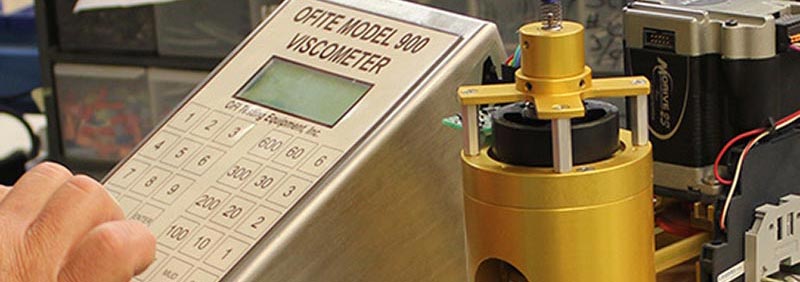
The most versatile instrument for testing the coefficient of friction is the Lubricity Evaluation Monitor (LEM). The LEM provides a quick, accurate test for either formation or simulated cased wellbores. A wellbore or casing sample is pressed against a rotating steel bob while immersed in a circulating bath of test fluid. The coefficient of friction is then calculated based on the torque on the bob, the side load applied to the sample, and the radius of the bob. The contact between the bob and the sample is periodically relieved, allowing fluid to enter the space between them, more accurately simulating the movement of the drill string.
For more information, visit the product page.